Squid Game – 7 Shocking Secrets, Deadly Games, and Gi-hun’s Epic Survival Story
Squid Game is one of the most internationally successful Korean thrillers of the streaming era. Created by Hwang Dong-hyuk, the series blends survival drama, psychological thriller, mystery, and sharp social commentary into a deadly competition built around familiar children’s games.
The story follows Seong Gi-hun, a man struggling financially, who receives a mysterious invitation to a strange competition. Along with hundreds of other desperate contestants, he ends up at a secret location where ordinary childhood games have been twisted into deadly challenges. Netflix sums it up simply: hundreds of cash-strapped players compete in children’s games for a life-changing prize, with deadly consequences for anyone who loses.
What makes Squid Game hit so hard is the contrast between its bright, colorful world and its genuinely dark story. The games look simple on the surface, but every single decision can completely change a player’s fate.
What Is Squid Game About?
At the center of it all is Gi-hun, also known as Player 456. He’s dealing with serious financial trouble and a rough personal life, and when a mysterious invitation shows up, he decides to take the risk and accept.
He soon finds himself one of 456 players competing for a massive cash prize. The rules sound simple enough — complete a series of children’s games — but there’s a terrifying catch: players who fail are eliminated. That forces the contestants into brutal choices involving trust, friendship, betrayal, and pure survival, and as the games go on, Gi-hun starts to understand this competition is about a lot more than the money.
Narrative Architecture & Structural Mechanics
The narrative structure relies on a multi-tiered escalation model. A total of 456 contestants—all facing catastrophic personal debt—are covertly transported to an isolated island facility off the Korean peninsula. Competing across six traditional children’s games over six days, players vie for a jackpot of ₩45.6 billion (₩100 million per eliminated contestant).
[Economic Desperation & Ddakji Recruitment] ──> [Island Isolation & Protocol]
                                                            │
                                                            ▼
[Game 1: Red Light, Green Light] ──(Clause 3 Vote)──> [Return to Seoul (Real-World Horror)]
                                                            │
                                                            ▼
[Re-Entry & Systematic Elimination] ──> [Game 6: Squid Game Showdown] ──> [Gi-hun's Ideological Rebellion]
The Narrative Masterstroke: Episode 2 (“Hell”)
The structural turning point occurs early in Season 1. After witnessing the lethal consequences of Red Light, Green Light, the players exercise Clause 3 of the agreement and vote to abort the games. Returned to their normal lives in Seoul, they discover that unpayable debts, medical crises, and social isolation are more brutal than the island itself. By having the majority voluntarily choose to return to the arena, Hwang Dong-hyuk eliminates the traditional hostage trope: the characters are bound not by physical chains, but by economic reality.
2. Cast & Character Performance Matrix
| Actor | Character | Character Arc & Narrative Dynamic |
| Lee Jung-jae | Seong Gi-hun (Player 456) | A flawed, gambling-addicted father whose innate empathy allows him to survive without surrendering his core humanity. |
| Park Hae-soo | Cho Sang-woo (Player 218) | A disgraced Seoul National University graduate whose cold utilitarian logic represents ruthless meritocratic capitalism. |
| Jung Ho-yeon | Kang Sae-byeok (Player 067) | A resourceful North Korean defector whose quest to reunite her family creates a quiet emotional core within the team. |
| Lee Byung-hun | Hwang In-ho (The Front Man) | A former police officer and past game winner who now enforces the system’s lethal meritocracy with cold precision. |
| Wi Ha-joon | Hwang Jun-ho | A police detective whose covert infiltration provides an investigative lens into the syndicate’s operational hierarchy. |
| Oh Yeong-su | Oh Il-nam (Player 001) | An elderly man with a brain tumor who participates for personal thrills, serving as the hidden architect of the games. |
| Anupam Tripathi | Abdul Ali (Player 199) | An exploited migrant worker whose unyielding trust exposes how vulnerability is preyed upon in hyper-competitive spaces. |
| Kim Joo-ryoung | Han Mi-nyeo (Player 212) | A volatile, opportunistic survivor who utilizes emotional manipulation and chaos to secure protection. |
1. The Terrifying Meaning Behind Children’s Games
One of the most fascinating ideas at the core of the show is how it takes innocent childhood games and turns them into deadly challenges — games that should represent fun and nostalgia instead become sources of genuine fear. That contrast is central to the show’s whole visual identity. The colorful, playground-like environments make the violence hit even harder, precisely because the audience expects these spaces to feel safe. The series keeps taking something familiar and turning it into something dangerous, over and over.
2. Red Light, Green Light
The first major game establishes the stakes immediately. Players move toward a finish line when allowed and freeze when the command changes — rules that sound almost absurdly simple. But the contestants quickly learn that failure comes with a deadly consequence, and that single moment completely changes the tone of the competition. Players who thought they were entering a strange but harmless contest suddenly realize they’re trapped in a fight for survival. Netflix’s own episode description confirms Gi-hun goes in expecting easy money before the horrifying reality sets in.
3. Player 456 – Seong Gi-hun
Lee Jung-jae plays Seong Gi-hun, the series’ central character — and he’s never presented as some flawless hero. He makes mistakes, struggles with money, and sometimes acts selfishly. But his experience inside the games gradually changes him. As the competition grows more brutal, Gi-hun starts thinking about the people around him instead of just his own survival, and that shift becomes one of the most important threads running through the whole story. By the later seasons, winning the prize isn’t even the point for him anymore — he’s determined to understand, and ultimately challenge, the system behind the games.
4. The Mysterious Front Man
The Front Man is one of the most important figures behind the entire operation, overseeing it and keeping tight control over the masked guards. His identity and backstory become increasingly important as the series unfolds, and his connection to detective Hwang Jun-ho adds another major layer of mystery. He represents the organization running the games, but the later seasons give him real complexity — and by Season 3, his conflict with Gi-hun becomes one of the central elements of the final chapter.
5. The Masked Guards
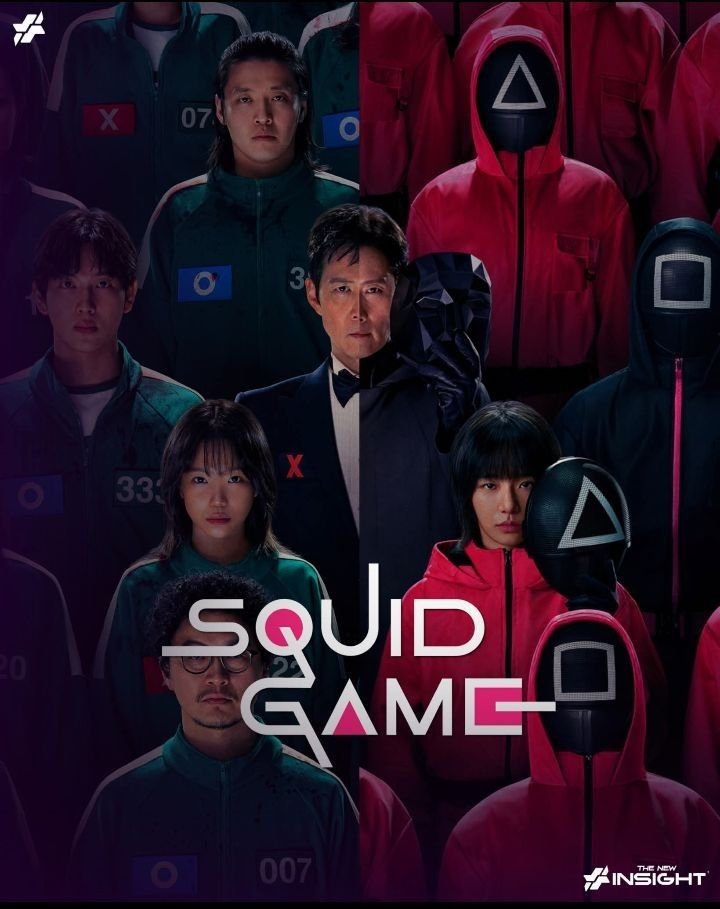
The guards are another unforgettable visual element — pink or red uniforms, masks marked with different shapes that establish a strict internal hierarchy. Those masks also keep the players from ever knowing who’s behind them, creating a world where almost everyone is anonymous. Players get reduced to numbers, guards to symbols, and the people actually running the games stay hidden entirely. That lack of identity reinforces the show’s whole atmosphere of mystery and control.
6. The Giant Prize
The competition dangles a massive financial reward — for people already dealing with debt and financial ruin, it represents a chance to completely rewrite their lives. That raises a real question the show keeps circling back to: how much is a person’s life actually worth when money’s on the table? Technically, the contestants are all there voluntarily, but their desperate circumstances shape that “choice” in a way that’s anything but free. That’s one of the show’s biggest themes — the games were never just about winning money. They’re about what desperate people are willing to risk for a shot at financial freedom.
The 456 Players
The number 456 has become synonymous with the show, since that’s exactly how many contestants enter — and Gi-hun himself is Player 456. The numbered tracksuits make the characters visually distinct while also stripping away some of their individuality, since inside the competition people are frequently referred to by number instead of name. That detail feeds directly into the show’s exploration of identity and inequality.
Ali Abdul
Ali is one of the most memorable players from the first season, representing a worker dealing with serious financial and personal hardship. His kindness and willingness to trust others become key parts of his storyline, and his relationships with other players highlight one of the show’s recurring ideas: trust can be both a strength and a liability. The games constantly force players to decide whether to cooperate or protect themselves.
Kang Sae-byeok
Kang Sae-byeok is another key contestant, entering the competition hoping to improve life for herself and her family. Her character brings a different perspective to the story, showing how varied personal circumstances can lead people to the exact same desperate place. Quiet, determined, and fiercely independent, her arc also underscores the real emotional cost these games carry.
Cho Sang-woo
Cho Sang-woo is one of Gi-hun’s childhood acquaintances — intelligent and outwardly successful, until financial trouble pulls him into the competition too. His character grows increasingly complicated as the games progress, showing how extreme circumstances can warp someone’s moral decision-making. His relationship with Gi-hun matters a lot, precisely because their old friendship has to exist alongside an increasingly ruthless, competitive environment.
The Psychological Battle
Squid Game was never just about physical survival — every game doubles as a psychological test. Who can you actually trust? Should you form an alliance? Should you share information? Should you protect someone else? Is cooperation smarter than competition? What happens when surviving requires betraying someone? Those questions are what push the series past a simple action thriller into something with real weight.
The Social Themes at the Show’s Core
Part of why Squid Game sparked so much international conversation is its sharp focus on inequality, debt, and financial pressure. Most contestants enter because their lives outside the game are already brutally difficult, and the show uses this exaggerated, fictional scenario to explore what happens when people start believing winning money is their last remaining option. The games become a metaphor — financial desperation turned into literal, physical survival.
Season 2: Gi-hun Returns
After the events of the first season, Gi-hun’s entire relationship with the competition shifts. Rather than just trying to move past what happened to him, he becomes determined to track down the people behind the games and dismantle the whole operation. Netflix’s official Season 2 synopsis notes that three years after winning the first game, Player 456 returns specifically to find the people behind Squid Game and end it for good. The season also introduces new players and expands well beyond the original group.
New Players and New Conflicts
Season 2 brings in several new characters with very different personalities, backgrounds, and motivations, sparking fresh alliances and new conflicts. Familiar faces return too, including Gi-hun, the Front Man, and Hwang Jun-ho. Netflix’s Season 2 cast list includes Lee Jung-jae, Lee Byung-hun, Wi Ha-jun, and a number of new additions to the ensemble.
Hwang Jun-ho’s Investigation
Detective Hwang Jun-ho plays a major role in unraveling the mystery behind Squid Game, with his investigation gradually leading him closer to the hidden organization running everything. While the players fight for survival inside the games, Jun-ho is working to expose what’s happening behind the scenes — giving the audience a second vantage point beyond just the players’ experience, and revealing more about the organization itself.
Season 3 and the Final Chapter
Season 3 became the final season of Squid Game, released by Netflix in 2025 to bring Gi-hun’s story to its planned conclusion. It picks up directly from where Season 2 left off, with Gi-hun grappling with the fallout of his failed rebellion and the people he’s lost along the way, while the Front Man continues pursuing his own agenda. The final season runs six episodes, according to Netflix’s official coverage.
Gi-hun’s Final Journey
Across all three seasons, Gi-hun undergoes real change. He starts out purely motivated by financial survival, but gradually becomes far more concerned with the people around him and the system that created the games in the first place. His arc essentially moves through four stages: money, survival, understanding, resistance — and that transformation is really the emotional backbone of the entire series.
The Visual Style of Squid Game
The show’s visual design is one of its biggest strengths. Bright colors dominate the game facilities, players wear green tracksuits, guards wear sharply contrasting uniforms, and massive staircases and geometric rooms create an almost dreamlike, disorienting environment. The result is a world that looks vibrant and playful while feeling deeply threatening underneath — production design that’s made the show instantly recognizable worldwide.
Why Squid Game Became a Global Phenomenon
A handful of things came together to make it click internationally:
Simple games — the rules are easy to grasp even as the stakes turn extreme.
Strong characters — every player carries their own history and motivation.
Mystery — the organization behind it all stays deliberately hidden.
Suspense — nearly every game creates real uncertainty.
Social commentary — the show digs into money, inequality, and desperation.
Visual identity — the masks, tracksuits, the giant doll, the colorful sets all became instantly iconic.
Emotional storytelling — survival mixed with genuine friendship, family, and betrayal.
The Global Impact of Squid Game
The series became a massive international success and helped push Korean-language television to an even bigger global audience. Its imagery spread well beyond the show itself — the green tracksuits, masked guards, and giant doll all became widely recognized cultural references, sparking extensive discussion about its themes and characters. Netflix still maintains a dedicated Squid Game hub with cast info, videos, guides, and behind-the-scenes content.
Is Squid Game Based on a True Story?
No — Squid Game is entirely fictional. But it uses these invented survival games to explore very real themes: debt, financial pressure, inequality, and desperation. The competition itself is fiction, but a lot of the social issues underneath it are painfully recognizable.
Final Thoughts
Squid Game took simple children’s games and turned them into a dark survival thriller, building an unforgettable world around that idea. Player 456’s story starts as a desperate attempt to solve a financial crisis, but eventually grows into something much bigger — a journey through friendship, morality, resistance, and the search for real answers.
Across its three seasons, the series expands from a mysterious, isolated competition into a much larger story about the people who built the games and the system surrounding them. With its unforgettable characters, shocking challenges, distinctive visual style, and psychological depth, Squid Game became one of the defining Korean series of the streaming era — with its 2025 final season bringing the main story to a confirmed close.
For fans of survival thrillers, mystery, psychological drama, and Korean television, Squid Game offers a genuinely distinctive blend of suspense and emotional storytelling.
FAQs
When did Squid Game start?
It premiered in 2021.
How many seasons does it have?
Three, with the third serving as the final season.
Who created it?
Hwang Dong-hyuk.
Who plays Gi-hun?
Lee Jung-jae, as Seong Gi-hun, Player 456.
Who is the Front Man?
The mysterious figure overseeing the Squid Game organization, played by Lee Byung-hun.
How many players enter the original competition?
456.
What’s the main prize?
A massive cash prize, with the amount tied to the number of contestants.
Is Squid Game a horror series?
It’s primarily classified as a thriller and drama, though it contains significant violence, suspense, and survival-horror elements — Netflix categorizes it among Korean TV thrillers and describes it as violent and suspenseful.
Did Squid Game end in 2025?
Yes — Season 3 released in 2025 and was confirmed as the final season of the main series.
RashidCinePro brings you movie reviews, Hollywood updates, Korean dramas, web series news, entertainment stories, trailers, and detailed articles covering popular movies and series from around the world.