James Gunn’s Superman – A Full Breakdown of the Plot, the DCU Reboot, and the Filmmaking Behind It
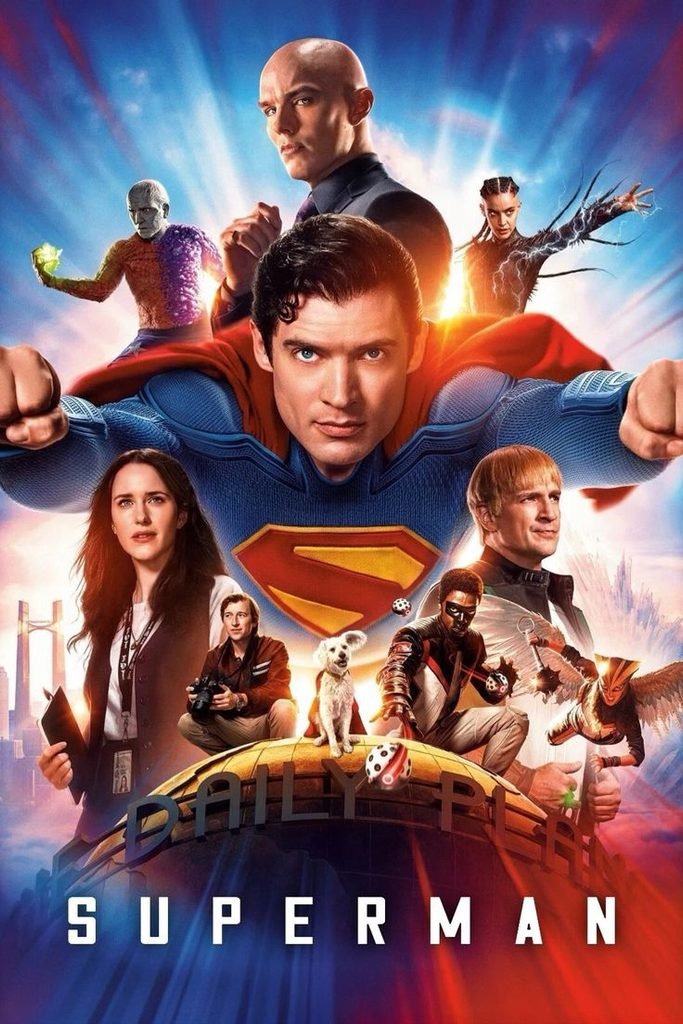
When DC Studios put James Gunn and Peter Safran in charge of overhauling the Warner Bros. superhero franchise, everyone immediately wanted to know what they’d do with the flagship title: Superman. As the film that kicks off Chapter 1, Gods and Monsters, it skips the well-worn territory of baby Kal-El landing on Earth or Krypton blowing up. Instead, it drops you straight into a fully-formed, vibrant world where superpowered beings have existed for over three centuries — and gives us a Man of Steel who’s still figuring out how to reconcile his alien roots with his very human Kansas upbringing.
Gunn wrote and directed the film himself, and he clearly wanted to move away from the grim, cynical tone that’s defined superhero movies for the last decade or two. Here, kindness isn’t naive — it’s treated as an active, almost radical choice in a world that’s stopped expecting it.
1. What Actually Happens
The story picks up three years into Clark Kent’s career as Superman and three months into his relationship with his Daily Planet colleague, Lois Lane. By this point, the world’s already used to metahumans being around. The real conflict is engineered by Lex Luthor, who sees Superman’s effortless power and genuine altruism as a threat — both to human agency in general, and, frankly, to his own ego.
[Pre-Existing DCU History] ──(300 Years of Metahumans)──> [Daily Planet / Clark & Lois]
                                                                  │
                                                                  ▼
[Hammer of Boravia / Ultraman] <── [Corporate "Justice Gang"] <── [Lex Luthor's Framing Plot]
              │
              ▼
[Resolution: Truth, Compassion & Krypto] ──> [Foundation for DCU Chapter 1]
Behind the scenes, Luthor secretly builds “The Hammer of Boravia” — a bio-mechanical clone called Ultraman, grown from synthesized Kryptonian DNA — and uses it to commit international atrocities disguised as alien aggression. At the same time, he’s quietly turning the Justice Gang (a corporate-backed team made up of Mister Terrific, Guy Gardner, and Hawkgirl) against Superman, framing him as an unpredictable, dangerous weapon rather than an ally.
The emotional weight of the film really comes down to Clark’s internal conflict — his instinct to save every living thing, even a destructive kaiju the Justice Gang wants to put down, running headfirst into the messiness of global politics, media spin, and his own physical limits.
2. The Cast
| Actor | Character | What they bring to it |
|---|---|---|
| David Corenswet | Kal-El / Clark Kent / Ultraman | Pulls off a genuine dual performance — Clark’s soft-spoken, slightly hunched modesty next to Superman’s warm, commanding presence, plus voicing the clone Ultraman |
| Rachel Brosnahan | Lois Lane | Sharp, fiercely intelligent, and appropriately skeptical — her cynicism gives the film’s optimism something real to push against |
| Nicholas Hoult | Lex Luthor | Not the unhinged mad-scientist type — more a driven, narcissistic tech mogul working through an inferiority complex about a literal god |
| Edi Gathegi | Michael Holt / Mister Terrific | Leads the Justice Gang with a pragmatic, logic-first mindset that clashes with Superman’s more empathetic instincts |
| Nathan Fillion | Guy Gardner / Green Lantern | Brash, bowl-cut and all, and mostly there to inject comic relief while poking fun at how commercialized heroism has become |
| Isabela Merced | Kendra Saunders / Hawkgirl | Battle-worn and carrying trauma across multiple past lives, serving as a counterweight to Clark’s stubborn optimism |
| Anthony Carrigan | Rex Mason / Metamorpho | A tragic figure reshaped by corporate experimentation — gives real emotional stakes to Luthor’s ethical shortcuts |
| María Gabriela de Faría | Angela Spica / The Engineer | A bio-tech enforcer whose nanite powers represent exactly the cold, synthetic future Luthor’s chasing |
3. How This Sets Up the Whole DCU
Superman isn’t just a movie — it’s basically the blueprint for how Gunn and Safran plan to build out the new DC Universe, and it takes a very different approach than what we’ve seen from other franchises.
Skipping the Origin Story Altogether
Instead of spending act one re-explaining where Superman came from, the film opens with a quick narrative crawl establishing that superheroes and mythic figures have been operating publicly since the 1800s. Little visual details — like a painting of the 1940s Justice Society hanging in the Hall of Justice — add depth without forcing the plot to stop and explain itself.
Using Other Heroes to Define Superman
The secondary heroes here aren’t just cameos for fans to spot — they’re doing real narrative work, defining what makes Superman different:
- The Justice Gang leans toward tactical efficiency, collateral damage be damned.
- Peacemaker represents the idea of peace enforced through violence.
- Superman, meanwhile, insists on preserving life, staying patient, and being completely transparent.
Putting Clark next to these more cynical, hardened heroes is really what makes his compassion feel like the actual superpower.
4. The Filmmaking Craft
Cinematographer Henry Braham (who also shot Guardians of the Galaxy Vol. 3 and The Flash) teamed up with VFX supervisor Stéphane Ceretti to build a look they’ve described as “living comic book art” — vibrant, Silver Age color palettes shot with tactile, large-format digital cameras.
Visual & Technical Pipeline:
[Large-Format IMAX Digital] ──> [Practical Suit / Hypnotic Glasses] ──> [Framestore / ILM / Weta VFX]
                                                                                │
                                                                                ▼
[Tactile Photorealistic Krypto] <── [Crystalline Fortress Design] <── [Custom Color Grading]
The Suit and the Glasses
The suit itself uses heavy fabric textures and bold, saturated reds and blues, with a chest emblem that pulls directly from Alex Ross and Mark Waid’s Kingdom Come. As for the age-old “how does no one recognize Clark Kent” problem — Gunn actually pulled a page from the comics and brought back the idea of hypnotic glasses, which subtly warp how Clark’s face and eyes are perceived by people around him.
Shooting for IMAX
The film was shot on RED V-Raptor XL and ARRI ALEXA 65 cameras, both certified for IMAX, and the aspect ratio shifts during flight sequences and the big Metropolis battles to make the most of the format.
Krypto and the Fortress of Solitude
Framestore handled the animation for Krypto, and reportedly based a lot of his movement and facial expressions on Gunn’s own rescue dog, Ozu. Rather than making him cartoonish, the animators went for photorealistic white fur against snowy backdrops — Krypto reads as just a regular dog who happens to be nearly indestructible.
The Fortress of Solitude, meanwhile, was built digitally crystal by crystal, trading the usual flat ice-cave look for a light-filled, refractive structure that actually reacts to the light around it.
5. The Score and the Look of Smallville vs. Metropolis
Composers John Murphy and David Fleming built a score that bridges John Williams’ iconic 1978 themes with more modern orchestral and acoustic touches.
Production designer Beth Mickle gave Metropolis and Smallville distinct identities — Metropolis leans into retro-futuristic Art Deco towers and sunlit plazas, while the Smallville scenes are shot with warm 35mm grain, golden-hour light, and a rustic, small-town feel.
Musically, Superman’s big heroic moments get brass and sweeping strings, while the quiet scenes on the Kent farm shift to acoustic guitar and solo woodwinds — a nice way of grounding a cosmic character in simple Kansas roots.
6. Box Office and What It Means for DC
On a $225 million budget, Superman brought in $618.7 million worldwide, and beyond the numbers, it landed well with critics for its warmth, visual style, and performances. More than anything, it did the job it needed to do: rebuilding real interest in the DC brand and laying down a foundation that carries straight into the next Chapter 1 projects, including Supergirl: Woman of Tomorrow and Man of Tomorrow.