Captain America: Civil War – 7 Epic Battles, Shocking Secrets, and the Avengers’ Biggest Conflict
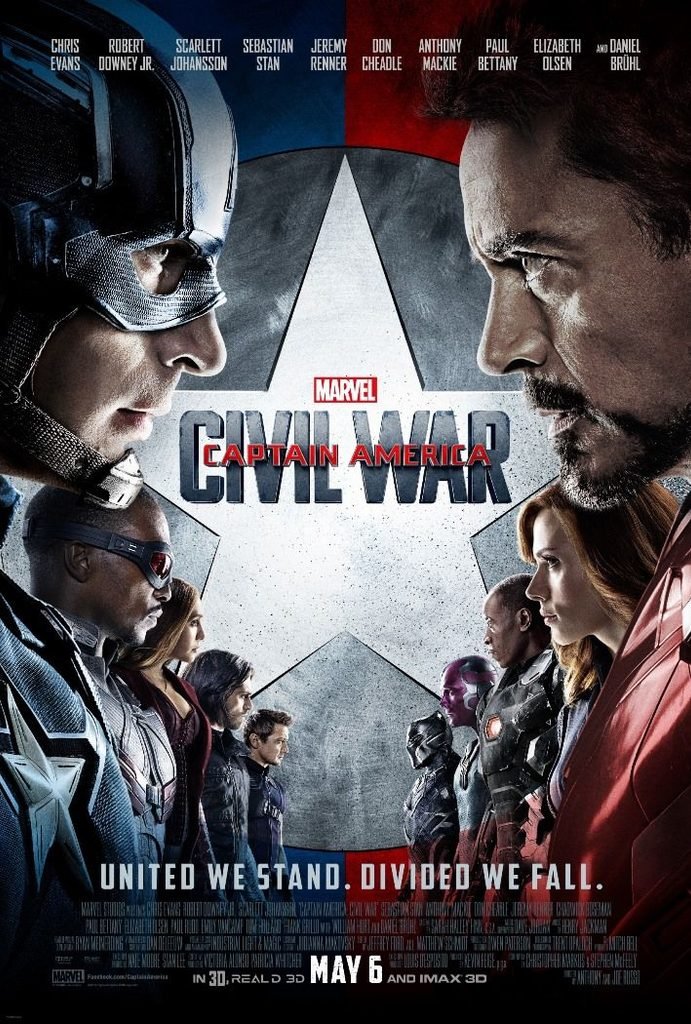
Captain America: Civil War is one of the most important films in the Marvel Cinematic Universe — it brought together an enormous roster of superheroes while putting Captain America and Iron Man on opposite sides of a genuinely painful conflict. Released on May 6, 2016, and directed by Anthony Russo and Joe Russo, the film stars Chris Evans, Robert Downey Jr., Scarlett Johansson, Sebastian Stan, Chadwick Boseman, Paul Rudd, and Tom Holland, among a very packed cast.
Rather than building around a traditional supervillain, the movie centers its conflict on responsibility, accountability, friendship, and the real consequences of superhero actions.
What’s Civil War Actually About?
The story picks up after a string of Avengers incidents cause serious destruction and civilian casualties. As pressure mounts for the team to operate under government supervision, the Avengers split over whether superheroes should answer to an international accountability system.
Tony Stark backs the idea of government oversight. Steve Rogers believes the Avengers need to keep the freedom to decide when and where they intervene. That disagreement eventually splits the team into two opposing sides — and things get even messier once Steve’s old friend Bucky Barnes, the Winter Soldier, gets tied to a major attack.
1. Captain America vs. Iron Man
The emotional core of the film is the conflict between Steve Rogers and Tony Stark. Both genuinely believe they’re protecting people — they just approach responsibility from completely different angles. Tony’s grown increasingly uneasy about the fallout from the Avengers’ actions, while Steve struggles to trust governments and institutions to make the call on when heroes should step in.
Their disagreement starts out political and personal, and eventually turns physical. That’s what makes this film feel different from a lot of earlier MCU entries — the biggest threat here isn’t an outside villain. It’s the Avengers themselves, coming apart from within.
2. The Sokovia Accords
The Sokovia Accords are introduced as a proposed system of international oversight for the Avengers. After the destruction their battles have caused, governments want real control over when the team can act. Tony backs the agreement; Steve stays skeptical.
That disagreement raises one of the film’s central questions: should superheroes be free to act on their own judgment, or should governments have authority over their missions? Rather than framing it as good versus evil, the film uses the conflict to show how two people with very different histories can arrive at completely different, equally reasonable conclusions.
3. The Return of Bucky Barnes
Bucky Barnes plays a huge role here. Steve still considers him his closest friend from before the war, even after Bucky was turned into the Winter Soldier and used as an assassin — and when Bucky becomes a target, Steve moves to protect him.
That adds another layer to the conflict entirely, since Tony and Steve aren’t just arguing about government oversight anymore. Their friendship and shared history get pulled directly into it, continuing a thread that started back in Captain America: The Winter Soldier.
4. The Arrival of Black Panther
One of the film’s biggest additions is T’Challa, played by Chadwick Boseman, who steps into the story following a tragic event involving his father. His personal motivation puts him on a direct collision course with Bucky.
His introduction here was a big deal — Civil War established Black Panther within the MCU two years before his solo film arrived in 2018. He’s presented as a highly skilled fighter with advanced technology, serious physical ability, and a deep connection to Wakanda.
5. Spider-Man Joins the Fight
Another major moment is the introduction of Tom Holland’s Peter Parker. Recruited by Tony Stark, Peter ends up fighting on Iron Man’s side of the conflict, and his presence adds some much-needed levity to an otherwise heavy story.
Watching him interact with other heroes is one of the film’s most memorable elements — a young, inexperienced superhero suddenly thrown in with some of the most powerful people on Earth. His debut here helped establish the version of Spider-Man the MCU would build on for years.
6. The Airport Battle
The airport battle is one of the most recognizable action sequences in the entire franchise. Two teams of superheroes — Captain America leading one, Iron Man leading the other — face off, with Spider-Man, Black Panther, Black Widow, Winter Soldier, Falcon, Hawkeye, Ant-Man, War Machine, Scarlet Witch, and Vision all in the mix.
Instead of fighting a common enemy, the heroes fight each other. The sequence blends huge-scale action with smaller character moments — Spider-Man geeking out over meeting other superheroes, Ant-Man pulling off some genuinely unexpected tactics — and it’s become one of the defining action set pieces in the MCU.
7. The Final Fight Changes Everything
The film’s closing confrontation between Captain America, Iron Man, and Bucky is far more personal than the airport battle. It brings out information about Tony’s parents and Bucky’s past — a revelation that completely reshapes Tony’s relationship with both Steve and Bucky.
That final fight shows just how fast a disagreement over responsibility can turn into something deeply personal. By the end of the film, the Avengers aren’t operating as one team anymore.
The Villain Pulling the Strings
Daniel Brühl plays Helmut Zemo, and he’s a different kind of MCU villain — rather than trying to overpower the Avengers physically, he works to manipulate the cracks already forming between them. His whole strategy runs on psychological pressure and information, not brute force, which makes him genuinely effective: the Avengers’ own internal divisions end up being the weapon used against them.
Two Different Perspectives
Part of what keeps this movie interesting is that Steve and Tony’s disagreement isn’t arbitrary — it’s shaped by their individual histories. Tony’s seen firsthand what happens when superhero actions go wrong, and wants real accountability. Steve’s been burned by institutions manipulating him before, and trusts his own judgment more than any government body. The film isn’t really asking who’s right — it’s asking how each of their experiences led them to such different conclusions.
The Weight of Friendship
Friendship runs through the entire story. Steve’s bond with Bucky shapes nearly every decision he makes, and Tony’s relationships with the rest of the team shape his just as much. The film does a good job showing how hard it is to separate personal relationships from larger responsibilities — and that emotional layer is what gives the big action set pieces real weight.
The Action and Visual Style
The film blends hand-to-hand combat, advanced tech, superhuman abilities, and large-scale destruction. Captain America’s grounded fighting style contrasts sharply with Iron Man’s high-tech armor, Black Panther brings a fast, aggressive edge, and Spider-Man leans on agility and web-slinging. That mix keeps the action varied instead of leaning on a single visual approach throughout.
Cast & Character Performance Matrix
| Actor | Character | Character Arc & Narrative Dynamic |
| Chris Evans | Steve Rogers / Captain America | Transitions from patriotic soldier to principled fugitive, refusing to surrender individual conscience to political bureaucracy. |
| Robert Downey Jr. | Tony Stark / Iron Man | Driven by guilt over Ultron’s destruction, seeking institutional control to curb unmonitored metahuman authority. |
| Sebastian Stan | Bucky Barnes / Winter Soldier | The traumatized victim of Hydra conditioning whose framed actions catalyze the team’s total collapse. |
| Chadwick Boseman | T’Challa / Black Panther | Makes his cinematic debut on a vengeance-driven quest for his father, ultimately rejecting hatred to capture Zemo alive. |
| Tom Holland | Peter Parker / Spider-Man | Introduced as an energetic, youthful counterweight recruited by Stark, grounding the high-stakes conflict in street-level perspective. |
| Daniel Brühl | Helmut Zemo | A powerless antagonist driven by grief who achieves complete tactical victory over the Avengers through intelligence and patience. |
Cast and Characters
This is one of the largest ensemble casts in the franchise:
- Chris Evans as Steve Rogers / Captain America
- Robert Downey Jr. as Tony Stark / Iron Man
- Scarlett Johansson as Natasha Romanoff / Black Widow
- Sebastian Stan as Bucky Barnes / Winter Soldier
- Anthony Mackie as Sam Wilson / Falcon
- Chadwick Boseman as T’Challa / Black Panther
- Tom Holland as Peter Parker / Spider-Man
- Paul Rudd as Scott Lang / Ant-Man
- Jeremy Renner as Clint Barton / Hawkeye
- Elizabeth Olsen as Wanda Maximoff / Scarlet Witch
- Paul Bettany as Vision
- Don Cheadle as War Machine
- Daniel Brühl as Helmut Zemo
Anthony Russo and Joe Russo directed, with Christopher Markus and Stephen McFeely handling the script.
Release and Box Office
Captain America: Civil War came out in 2016 with a runtime of roughly 2 hours and 27 minutes. It opened huge — Disney reported a $179.1 million domestic opening weekend, with the worldwide total hitting $673.1 million within just 12 days.
Why This Movie Matters So Much to the MCU
Civil War had real, lasting consequences for the wider Marvel storyline. It introduced Black Panther and Spider-Man to the MCU while fundamentally reshaping the relationship between Captain America and Iron Man — a rift that carried straight through into Avengers: Infinity War and Avengers: Endgame.
That’s really why it works as more than just a Captain America movie. It’s a genuine turning point for the entire Avengers roster.
Final Thoughts
Captain America: Civil War pairs superhero action with a real story about responsibility, trust, friendship, and consequence. The central conflict isn’t just Captain America versus Iron Man — it’s two friends and teammates who started out with fundamentally different ideas about how heroes should operate.
Between its massive cast, major character debuts, the unforgettable airport battle, and that gutting final confrontation, the film became a genuine milestone for the MCU — and for Marvel fans, it’s still one of the key films to understand, since so much of what followed traces directly back to the divide this story created.
FAQs
Is Captain America: Civil War an Avengers movie?
Officially, it’s a Captain America film — but it features a huge number of Avengers and other MCU characters.
When did it come out?
May 6, 2016.
Who directed it?
Anthony Russo and Joe Russo.
Who plays Captain America?
Chris Evans.
Who plays Iron Man?
Robert Downey Jr.
Is Spider-Man in this film?
Yes — this is Tom Holland’s MCU debut as Peter Parker.
Is Black Panther in it?
Yes, played by Chadwick Boseman.
What’s the main conflict about?
Whether the Avengers should operate under government oversight — a question that splits Steve Rogers and Tony Stark and drives the entire film.
RashidCinePro brings you movie reviews, Hollywood news, entertainment updates, trailers, web series coverage, and detailed articles about the biggest films from around the world.